
Maybe you’ve had your dental bridge for 15 years. It has done its job well. But at your last checkup, your dentist mentioned it may need replacing soon.
A new bridge is one option, but it isn’t the only one. Dental implants can support replacement teeth on their own, without relying on neighboring teeth. Can you replace a dental bridge with implants? In the right situation, yes. It depends on the health of your supporting teeth, your gums, the jawbone at the missing-tooth site, and how many teeth the bridge replaces. Not every bridge can or should be converted, so your existing bridge needs an evaluation first.
At Graniteville Dental Solutions, we provide dental implant restorations in Waterford, CT, and work with implant specialists who handle surgical placement. Below, we cover what happens to your supporting teeth, whether you have enough bone, your treatment choices, and the final restoration.
Can an Existing Dental Bridge Be Replaced With Dental Implants?
Yes, in selected cases. Your old bridge isn’t turned into an implant restoration, though. Your dentist first evaluates the bridge, the teeth beneath it, and the missing-tooth space. A new plan is then built from those findings.
How a Traditional Dental Bridge Is Supported by Natural Teeth
A traditional bridge relies on your natural teeth for support. It has a few connected parts:
- Abutment teeth, the natural teeth on each side of the gap, which are reshaped to hold crowns
- Crowns, which cap the abutment teeth
- A pontic, the false tooth that fills the gap
All of these units are joined into one piece. When you chew, the force on the pontic passes to the abutment teeth. Our team also provides dental crowns and bridges for patients who choose to stay with a tooth-supported option.
How Dental Implants Support Replacement Teeth Independently
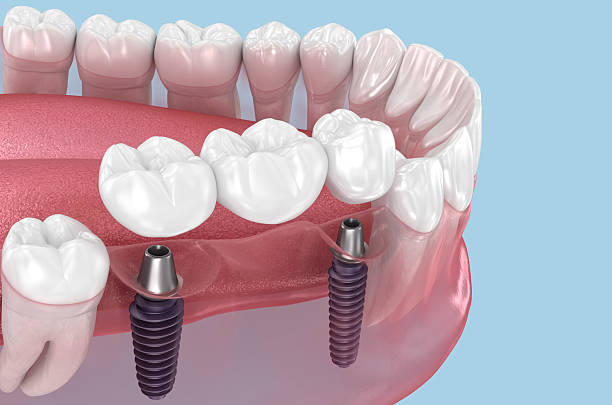
A dental implant, also called an implant fixture, is a small post placed in the jawbone. Over time, the bone bonds to it. A connector called an implant abutment then attaches the implant to a crown or bridge on top.
Because the implant sits in bone, it doesn’t need neighboring teeth for support. Not every missing tooth needs its own implant, since two implants can sometimes support a bridge.
Why Replacing a Bridge With Implants Requires a New Treatment Plan
Your old bridge was designed around your natural teeth. An implant restoration is designed around implants, so the plan starts fresh. Your dentist looks at:
- Where implants could go and how much bone is available
- How much space is available for the new teeth
- The design of the new crown or bridge
- How your teeth come together when you bite
- The health of the teeth that held the old bridge
The old bridge usually isn’t reused. If a supporting tooth can’t be saved, the plan may also need to address missing or failing teeth beyond the original gap.
Why Do Patients Consider Replacing an Old Dental Bridge?
Many bridges last for years. These are the most common reasons patients start asking about other options.
The Existing Bridge Is Worn, Cracked, or Damaged
Years of chewing can wear down a bridge. Porcelain and other bridge materials can chip, crack, or lose their seal. Once a bridge is damaged, a repair may not hold up, and replacement often becomes part of the conversation.
Decay Has Developed Around a Bridge-Supporting Tooth
The edges of a crown, called margins, can collect plaque. Over time, decay can form at those edges on an abutment tooth. Small areas may be treatable, while deep decay may affect whether the tooth can be restored at all.
The Bridge Feels Loose or Uncomfortable
A bridge can feel loose when the cement breaks down, a supporting tooth weakens or shifts, or decay forms underneath. A worn bridge or a change in your bite can also cause discomfort. Any movement should be checked first, since the cause shapes the next step.
The Patient Wants to Avoid Using Neighboring Teeth for Support
Some patients like the idea of a replacement tooth that stands on its own. With an implant, the teeth next to the gap don’t carry the load. That can be appealing when those teeth are otherwise healthy.
Cleaning Under the Existing Bridge Has Become Difficult
Food and plaque can collect under the pontic, and cleaning there takes floss threaders or special brushes. Implant restorations also need careful daily cleaning, though the routine may look different.
What Happens to the Teeth Supporting the Old Dental Bridge?
This question sets bridge replacement apart from replacing a tooth for the first time. Your supporting teeth have already been shaped for crowns and have carried extra load for years. What happens to them depends on the condition of each tooth.
Can the Supporting Teeth Remain in Place After Bridge Removal?
In many cases, yes. If an abutment tooth is healthy, well supported by gum and bone, and restorable, it can stay. Removing the bridge doesn’t mean removing the teeth that held it. Your dentist evaluates each tooth on its own once the bridge comes off.
What if the Supporting Teeth Have Large Fillings or Previous Crown Preparation?
Abutment teeth were shaped down when your bridge was made. Some may also have large fillings under the old crowns. Once the bridge is removed, each tooth usually needs its own crown or another restoration.
Your new plan has to cover two things. It must replace the missing tooth and protect the teeth that held the old bridge.
What if a Bridge-Supporting Tooth Is Cracked or Severely Decayed?
Your dentist weighs a few factors:
- How much healthy tooth structure is left
- How far a crack extends, especially below the gumline
- The gum and bone support around the tooth
- The tooth’s long-term outlook
Some damaged teeth can be saved with additional treatment and a new crown. Extraction is discussed only when a tooth can’t be predictably restored.
Can a Dentist Replace the Bridge Without Removing Any Natural Teeth?
In some cases, yes. If both supporting teeth are healthy, each may receive a new crown. An implant can then replace the missing tooth on its own. Whether this works depends on your exam, your imaging, and the bone at the gap.
Is There Enough Jawbone for Dental Implants After Wearing a Bridge?
A bridge replaces the visible part of a missing tooth. It doesn’t place anything into the bone beneath the pontic. So the bone at that spot may have changed since the tooth was lost.
Why Bone Can Shrink Beneath a Traditional Dental Bridge
After a tooth is lost, the alveolar ridge, the bone that held the tooth, starts to remodel. Without a tooth root, some of that bone can shrink over time. This is called bone resorption, and the amount varies from person to person.
How Long-Term Tooth Loss Can Affect Implant Placement
An implant needs enough bone height and width to hold it securely. After years under a bridge, the ridge may be thinner or shorter, and its shape may change. Nearby structures, like nerves or the sinus, also affect where an implant can go.
How 3D Imaging Helps Evaluate the Missing-Tooth Site
3D imaging, such as a cone beam CT (CBCT) scan, shows bone height, width, and nearby anatomy. That helps the care team plan where an implant could go. This imaging is often done as part of surgical planning with the implant specialist.
Can Implants Still Be Possible if Bone Loss Has Occurred?
Frequently, yes. Options depend on how much bone was lost, where it was lost, and what type of implant fits the site. Some patients may need an additional procedure to rebuild bone first. Our guide to the bone needed for dental implants explains this in more detail.
Can One Implant Replace a Three-Unit Dental Bridge?
Yes, in selected cases. A three-unit bridge usually replaces one missing tooth, using two natural teeth for support. One implant with a crown can replace that missing tooth. The two former supporting teeth are then restored separately if needed.
Replacing One Missing Tooth With an Implant Crown
An implant crown stands on its own and doesn’t connect to the teeth beside it. You can clean around it much like a natural tooth.
Restoring the Two Former Bridge-Supporting Teeth
Because these teeth were reshaped for the old bridge, they usually need individual crowns to protect the remaining tooth structure.
Why One Implant Is Not Automatically Suitable for Every Bridge
The number of units on a bridge doesn’t always match the number of missing teeth. Gap size, bone, bite force, and the final restoration design all matter. Some gaps need more than one implant or a different option.
What if Your Old Bridge Replaces Several Missing Teeth?
Longer bridges replace two or more missing teeth. The right implant design depends on how many teeth are missing and where.
Individual Implant Crowns for Separate Missing Teeth
If the missing teeth are spread apart, separate implant crowns may be considered. This works best when the bone and space at each site, and your goals, support it.
Implant-Supported Bridges for Consecutive Missing Teeth
When several teeth in a row are missing, an implant-supported bridge may be an option. Implants act as the supports instead of natural teeth.
How the Number and Position of Implants Are Determined
There is no set number of implants for every patient. Your care team considers:
- The available bone at each site
- Where the gap sits in your mouth
- Your bite force
- How many teeth need replacing
- The design of the final restoration
When a New Traditional Bridge May Still Be Appropriate
A new tooth-supported bridge may still make sense if the supporting teeth already need crowns. It can also suit patients who have limited bone or want to avoid surgery. If you’re comparing the two from the start, our single dental implant vs. dental bridge guide covers the basics.
What Is the Process for Replacing a Dental Bridge With Implant Restorations?
Every case is different, but most bridge-to-implant plans follow a similar order.
Step 1. Evaluate the Existing Bridge and Supporting Teeth
Your dentist examines the bridge, checks for decay, and assesses each abutment tooth. X-rays help show what is happening beneath the crowns. Active gum disease needs attention before implant treatment moves forward.
Step 2. Assess Bone, Bite, and Available Restorative Space
Next, the team checks the bone at the missing-tooth site, your bite, and the room available for new teeth. Your final restoration is planned around that anatomy and your bite.
Step 3. Determine Whether the Bridge Should Be Removed or Replaced
Timing depends on the bridge’s condition and the outlook for each supporting tooth. Some bridges come off early in treatment. Others may stay in place while planning continues.
Step 4. Coordinate Implant Placement With a Surgical Specialist
An implant specialist handles the surgical placement. Our team takes part in planning, so the implant position supports your final crown or bridge. Once you heal, we design and place that final restoration.
Step 5. Protect Appearance and Function During Treatment
You may need a temporary restoration while you heal. Not every patient can keep the old bridge during treatment, and not every case allows a fixed temporary tooth.
Step 6. Design and Deliver the Final Implant Crown or Bridge
Once the implant has healed, your team takes digital scans or impressions. A dental laboratory then makes your crown or bridge. Before final placement, your dentist checks:
- The shape and contours of the restoration
- Contact with neighboring teeth
- Your bite alignment
- The fit on the implant
- How it feels to you
Our guide to implant restoration after surgery covers this stage in more detail.
Step 7. Establish Long-Term Implant Restoration Maintenance
Routine checkups let your team monitor your gums, the fit of your restoration, and your bite. Professional dental cleanings and daily home care help keep plaque under control around implants.
How Long Does It Take to Replace a Dental Bridge With Implants?
Many cases take several months from start to finish. Your schedule depends on healing, any extra treatment, and the design of your final restoration.
Why Implant Integration Can Affect the Timeline
After placement, the bone needs time to bond with the implant. This process is called osseointegration. The final restoration usually waits until the implant is stable enough to support it.
How Additional Tooth or Bone Treatment Can Extend the Process
Extractions, healing time, and bone procedures can add months. So can treatment for decay or gum problems.
When Temporary Teeth May Be Used
Temporary teeth are a case-by-case decision based on the site, your bite, and your overall plan.
Why the Final Implant Restoration Requires Precise Planning
Lab design, bite checks, and fit adjustments take time. They help your restoration look natural and feel comfortable when you chew.
Is Replacing a Dental Bridge With Implants Worth It?
It depends on your situation and priorities.
Possible advantages:
- Support that doesn’t depend on neighboring teeth
- No further shaping of healthy adjacent teeth
- Bone stimulation that may help maintain bone at the implant site
- Restorations that can be designed and treated individually
- More flexibility for future dental work
Things to consider:
- Surgery to place the implants
- A longer treatment timeline
- Overall cost
- Whether you have enough bone
- Your gum health
- Ongoing maintenance
When Implant Restorations May Offer Long-Term Advantages
Implants may make the most sense when the teeth next to the gap are healthy, the bone is adequate, and you want independent support. They can also help when an abutment tooth fails, and a longer bridge would be harder to support.
When Keeping or Replacing a Traditional Bridge May Be Reasonable
A traditional bridge may still be a good choice if your supporting teeth need crowns anyway, bone is limited, or you prefer to avoid surgery. Some older bridges can also stay in place if they are sound and easy to keep clean.
Why the Best Decision Depends on the Whole Mouth
Your gum health, bite, other crowns and fillings, and future dental needs all shape this choice.
How Much Does It Cost to Replace a Dental Bridge With Implants?
Your total depends on how many teeth are involved, what each tooth needs, and your insurance. Our team can give you a personalized estimate after your evaluation.
Factors Affecting Implant Restoration Costs
Your estimate may include:
- The number of implants
- Surgical placement by the specialist
- Site preparation, such as extractions or bone procedures
- Implant components, like abutments
- Final crowns or bridges
- Laboratory work
- Other restorations for nearby teeth
What Happens if the Former Bridge-Supporting Teeth Need Crowns?
Crowns for the former abutment teeth are separate from the implant work. They are still part of your total treatment plan, so make sure your estimate includes them.
Does Dental Insurance Cover Replacing a Bridge With Implants?
It depends on your plan. Some plans cover part of implant or crown costs. Others exclude implants or limit how often a bridge can be replaced. Annual maximums and waiting periods may also apply. Our team can help you review your benefits.
Why Comparing Total Treatment Plans Is More Useful Than Comparing One Procedure Fee
Comparing one implant crown fee with one new bridge fee can be misleading. Each path may include different steps, like crowns on abutment teeth or extra procedures. Compare the full plans side by side.
How Does Graniteville Dental Solutions Plan Bridge-to-Implant Restorations in Waterford, CT?
Many patients with an aging bridge ask us first whether they can keep their natural teeth. At Graniteville Dental Solutions in Waterford, our dentists handle the restorative side of implant care. Implant specialists handle the surgery. Our dental implant restoration services cover the crowns and bridges that complete your treatment.
Evaluating the Existing Bridge and Natural Teeth
We start by looking closely at your bridge and the teeth that support it. Our goal is to keep healthy, restorable teeth whenever we can. You’ll get a clear explanation of what we find and what each option involves.
Planning the Implant Restoration Before Surgical Placement
We plan the final crown or bridge before the implant is placed. This is called restoration-driven planning. Sharing that plan with the implant specialist helps place each implant where it best supports your new teeth.
Using Digital Scanning and Dental Laboratory Collaboration
Our team captures the details with digital scans or impressions and other dental technology. We then work closely with a dental laboratory on fit, shade, shape, and function.
Restoring a Balanced Bite With Custom Implant Crowns or Bridges
We check the contours, contacts, and bite of each restoration so you can chew comfortably. We also design it so you can keep it clean at home.
Frequently Asked Questions About Replacing Dental Bridges With Implants
Can you replace a dental bridge with implants?
Yes, in selected cases. It depends on your supporting teeth, gums, bone, and overall oral health.
Do the teeth under my old bridge have to be removed?
Not necessarily. Healthy, restorable supporting teeth can often stay and receive new crowns. Removal is only discussed when a tooth can’t be predictably restored.
Can one dental implant replace a three-unit bridge?
Yes, in selected cases. A three-unit bridge has three units but usually replaces only one missing tooth. One implant crown may replace that tooth.
Can you get implants after wearing a bridge for 10 or 20 years?
Long-term bridge use doesn’t automatically rule out implants. The bone at the missing-tooth site may have changed, so it needs a careful evaluation with imaging.
Do you need a bone graft after removing a dental bridge?
Not always. The bone available at the implant site determines whether grafting or another procedure is considered.
Is replacing a bridge with implants painful?
Experiences vary. The surgical stage is typically done with local anesthesia, and some soreness afterward is common. The restorative stages, like scans and crown placement, usually involve less discomfort.
Can you keep your old bridge while waiting for implants?
Sometimes. It depends on the bridge’s condition and your treatment plan. Temporary options may be considered if it comes off early.
How many implants are needed to replace a dental bridge?
It depends on the number of missing teeth, your bone, your bite, and the restoration design. There is no single number for everyone.
Is an implant-supported bridge better than a traditional dental bridge?
Neither is better for everyone. Implant-supported bridges don’t rely on natural teeth, while traditional bridges avoid surgery. The right choice depends on your clinical situation.
How long do implant restorations last after bridge replacement?
Longevity varies. The implant and the crown or bridge on top have different maintenance needs, and a crown may eventually need replacing. Regular checkups help catch problems like a loose or damaged implant crown early.
Does insurance cover replacing a dental bridge with implants?
Coverage depends on your plan. Benefits, exclusions, and your share of the cost vary, so check your plan details.
Explore Dental Bridge Replacement and Implant Restorations in Waterford, CT
If your dental bridge is worn, damaged, or ready for replacement, you may have more than one option. Graniteville Dental Solutions in Waterford, CT can evaluate your bridge, supporting teeth, and bite. We work with implant specialists when surgery is right for you and plan custom implant crowns and bridges for your smile. Schedule a dental bridge replacement consultation to talk through your next step.
Can You Replace an Old Dental Bridge With Implants? Options for Waterford, CT Patients
Maybe you’ve had your dental bridge for 15 years. It has done its job well. But at your last checkup, your dentist mentioned it may need replacing soon.
A new bridge is one option, but it isn’t the only one. Dental implants can support replacement teeth on their own, without relying on neighboring teeth. Can you replace a dental bridge with implants? In the right situation, yes. It depends on the health of your supporting teeth, your gums, the jawbone at the missing-tooth site, and how many teeth the bridge replaces. Not every bridge can or should be converted, so your existing bridge needs an evaluation first.
At Graniteville Dental Solutions, we provide dental implant restorations in Waterford, CT, and work with implant specialists who handle surgical placement. Below, we cover what happens to your supporting teeth, whether you have enough bone, your treatment choices, and the final restoration.
Can an Existing Dental Bridge Be Replaced With Dental Implants?
Yes, in selected cases. Your old bridge isn’t turned into an implant restoration, though. Your dentist first evaluates the bridge, the teeth beneath it, and the missing-tooth space. A new plan is then built from those findings.
How a Traditional Dental Bridge Is Supported by Natural Teeth
A traditional bridge relies on your natural teeth for support. It has a few connected parts:
- Abutment teeth, the natural teeth on each side of the gap, which are reshaped to hold crowns
- Crowns, which cap the abutment teeth
- A pontic, the false tooth that fills the gap
All of these units are joined into one piece. When you chew, the force on the pontic passes to the abutment teeth. Our team also provides dental crowns and bridges for patients who choose to stay with a tooth-supported option.
How Dental Implants Support Replacement Teeth Independently
A dental implant, also called an implant fixture, is a small post placed in the jawbone. Over time, the bone bonds to it. A connector called an implant abutment then attaches the implant to a crown or bridge on top.
Because the implant sits in bone, it doesn’t need neighboring teeth for support. Not every missing tooth needs its own implant, since two implants can sometimes support a bridge.
Why Replacing a Bridge With Implants Requires a New Treatment Plan
Your old bridge was designed around your natural teeth. An implant restoration is designed around implants, so the plan starts fresh. Your dentist looks at:
- Where implants could go and how much bone is available
- How much space is available for the new teeth
- The design of the new crown or bridge
- How your teeth come together when you bite
- The health of the teeth that held the old bridge
The old bridge usually isn’t reused. If a supporting tooth can’t be saved, the plan may also need to address missing or failing teeth beyond the original gap.
Why Do Patients Consider Replacing an Old Dental Bridge?
Many bridges last for years. These are the most common reasons patients start asking about other options.
The Existing Bridge Is Worn, Cracked, or Damaged
Years of chewing can wear down a bridge. Porcelain and other bridge materials can chip, crack, or lose their seal. Once a bridge is damaged, a repair may not hold up, and replacement often becomes part of the conversation.
Decay Has Developed Around a Bridge-Supporting Tooth
The edges of a crown, called margins, can collect plaque. Over time, decay can form at those edges on an abutment tooth. Small areas may be treatable, while deep decay may affect whether the tooth can be restored at all.
The Bridge Feels Loose or Uncomfortable
A bridge can feel loose when the cement breaks down, a supporting tooth weakens or shifts, or decay forms underneath. A worn bridge or a change in your bite can also cause discomfort. Any movement should be checked first, since the cause shapes the next step.
The Patient Wants to Avoid Using Neighboring Teeth for Support
Some patients like the idea of a replacement tooth that stands on its own. With an implant, the teeth next to the gap don’t carry the load. That can be appealing when those teeth are otherwise healthy.
Cleaning Under the Existing Bridge Has Become Difficult
Food and plaque can collect under the pontic, and cleaning there takes floss threaders or special brushes. Implant restorations also need careful daily cleaning, though the routine may look different.
What Happens to the Teeth Supporting the Old Dental Bridge?
This question sets bridge replacement apart from replacing a tooth for the first time. Your supporting teeth have already been shaped for crowns and have carried extra load for years. What happens to them depends on the condition of each tooth.
Can the Supporting Teeth Remain in Place After Bridge Removal?
In many cases, yes. If an abutment tooth is healthy, well supported by gum and bone, and restorable, it can stay. Removing the bridge doesn’t mean removing the teeth that held it. Your dentist evaluates each tooth on its own once the bridge comes off.
What if the Supporting Teeth Have Large Fillings or Previous Crown Preparation?
Abutment teeth were shaped down when your bridge was made. Some may also have large fillings under the old crowns. Once the bridge is removed, each tooth usually needs its own crown or another restoration.
Your new plan has to cover two things. It must replace the missing tooth and protect the teeth that held the old bridge.
What if a Bridge-Supporting Tooth Is Cracked or Severely Decayed?
Your dentist weighs a few factors:
- How much healthy tooth structure is left
- How far a crack extends, especially below the gumline
- The gum and bone support around the tooth
- The tooth’s long-term outlook
Some damaged teeth can be saved with additional treatment and a new crown. Extraction is discussed only when a tooth can’t be predictably restored.
Can a Dentist Replace the Bridge Without Removing Any Natural Teeth?
In some cases, yes. If both supporting teeth are healthy, each may receive a new crown. An implant can then replace the missing tooth on its own. Whether this works depends on your exam, your imaging, and the bone at the gap.
Is There Enough Jawbone for Dental Implants After Wearing a Bridge?
A bridge replaces the visible part of a missing tooth. It doesn’t place anything into the bone beneath the pontic. So the bone at that spot may have changed since the tooth was lost.
Why Bone Can Shrink Beneath a Traditional Dental Bridge
After a tooth is lost, the alveolar ridge, the bone that held the tooth, starts to remodel. Without a tooth root, some of that bone can shrink over time. This is called bone resorption, and the amount varies from person to person.
How Long-Term Tooth Loss Can Affect Implant Placement
An implant needs enough bone height and width to hold it securely. After years under a bridge, the ridge may be thinner or shorter, and its shape may change. Nearby structures, like nerves or the sinus, also affect where an implant can go.
How 3D Imaging Helps Evaluate the Missing-Tooth Site
3D imaging, such as a cone beam CT (CBCT) scan, shows bone height, width, and nearby anatomy. That helps the care team plan where an implant could go. This imaging is often done as part of surgical planning with the implant specialist.
Can Implants Still Be Possible if Bone Loss Has Occurred?
Frequently, yes. Options depend on how much bone was lost, where it was lost, and what type of implant fits the site. Some patients may need an additional procedure to rebuild bone first. Our guide to the bone needed for dental implants explains this in more detail.
Can One Implant Replace a Three-Unit Dental Bridge?
Yes, in selected cases. A three-unit bridge usually replaces one missing tooth, using two natural teeth for support. One implant with a crown can replace that missing tooth. The two former supporting teeth are then restored separately if needed.
Replacing One Missing Tooth With an Implant Crown
An implant crown stands on its own and doesn’t connect to the teeth beside it. You can clean around it much like a natural tooth.
Restoring the Two Former Bridge-Supporting Teeth
Because these teeth were reshaped for the old bridge, they usually need individual crowns to protect the remaining tooth structure.
Why One Implant Is Not Automatically Suitable for Every Bridge
The number of units on a bridge doesn’t always match the number of missing teeth. Gap size, bone, bite force, and the final restoration design all matter. Some gaps need more than one implant or a different option.
What if Your Old Bridge Replaces Several Missing Teeth?
Longer bridges replace two or more missing teeth. The right implant design depends on how many teeth are missing and where.
Individual Implant Crowns for Separate Missing Teeth
If the missing teeth are spread apart, separate implant crowns may be considered. This works best when the bone and space at each site, and your goals, support it.
Implant-Supported Bridges for Consecutive Missing Teeth
When several teeth in a row are missing, an implant-supported bridge may be an option. Implants act as the supports instead of natural teeth.
How the Number and Position of Implants Are Determined
There is no set number of implants for every patient. Your care team considers:
- The available bone at each site
- Where the gap sits in your mouth
- Your bite force
- How many teeth need replacing
- The design of the final restoration
When a New Traditional Bridge May Still Be Appropriate
A new tooth-supported bridge may still make sense if the supporting teeth already need crowns. It can also suit patients who have limited bone or want to avoid surgery. If you’re comparing the two from the start, our single dental implant vs. dental bridge guide covers the basics.
What Is the Process for Replacing a Dental Bridge With Implant Restorations?
Every case is different, but most bridge-to-implant plans follow a similar order.
Step 1. Evaluate the Existing Bridge and Supporting Teeth
Your dentist examines the bridge, checks for decay, and assesses each abutment tooth. X-rays help show what is happening beneath the crowns. Active gum disease needs attention before implant treatment moves forward.
Step 2. Assess Bone, Bite, and Available Restorative Space
Next, the team checks the bone at the missing-tooth site, your bite, and the room available for new teeth. Your final restoration is planned around that anatomy and your bite.
Step 3. Determine Whether the Bridge Should Be Removed or Replaced
Timing depends on the bridge’s condition and the outlook for each supporting tooth. Some bridges come off early in treatment. Others may stay in place while planning continues.
Step 4. Coordinate Implant Placement With a Surgical Specialist
An implant specialist handles the surgical placement. Our team takes part in planning, so the implant position supports your final crown or bridge. Once you heal, we design and place that final restoration.
Step 5. Protect Appearance and Function During Treatment
You may need a temporary restoration while you heal. Not every patient can keep the old bridge during treatment, and not every case allows a fixed temporary tooth.
Step 6. Design and Deliver the Final Implant Crown or Bridge
Once the implant has healed, your team takes digital scans or impressions. A dental laboratory then makes your crown or bridge. Before final placement, your dentist checks:
- The shape and contours of the restoration
- Contact with neighboring teeth
- Your bite alignment
- The fit on the implant
- How it feels to you
Our guide to implant restoration after surgery covers this stage in more detail.
Step 7. Establish Long-Term Implant Restoration Maintenance
Routine checkups let your team monitor your gums, the fit of your restoration, and your bite. Professional dental cleanings and daily home care help keep plaque under control around implants.
How Long Does It Take to Replace a Dental Bridge With Implants?
Many cases take several months from start to finish. Your schedule depends on healing, any extra treatment, and the design of your final restoration.
Why Implant Integration Can Affect the Timeline
After placement, the bone needs time to bond with the implant. This process is called osseointegration. The final restoration usually waits until the implant is stable enough to support it.
How Additional Tooth or Bone Treatment Can Extend the Process
Extractions, healing time, and bone procedures can add months. So can treatment for decay or gum problems.
When Temporary Teeth May Be Used
Temporary teeth are a case-by-case decision based on the site, your bite, and your overall plan.
Why the Final Implant Restoration Requires Precise Planning
Lab design, bite checks, and fit adjustments take time. They help your restoration look natural and feel comfortable when you chew.
Is Replacing a Dental Bridge With Implants Worth It?
It depends on your situation and priorities.
Possible advantages:
- Support that doesn’t depend on neighboring teeth
- No further shaping of healthy adjacent teeth
- Bone stimulation that may help maintain bone at the implant site
- Restorations that can be designed and treated individually
- More flexibility for future dental work
Things to consider:
- Surgery to place the implants
- A longer treatment timeline
- Overall cost
- Whether you have enough bone
- Your gum health
- Ongoing maintenance
When Implant Restorations May Offer Long-Term Advantages
Implants may make the most sense when the teeth next to the gap are healthy, the bone is adequate, and you want independent support. They can also help when an abutment tooth fails, and a longer bridge would be harder to support.
When Keeping or Replacing a Traditional Bridge May Be Reasonable
A traditional bridge may still be a good choice if your supporting teeth need crowns anyway, bone is limited, or you prefer to avoid surgery. Some older bridges can also stay in place if they are sound and easy to keep clean.
Why the Best Decision Depends on the Whole Mouth
Your gum health, bite, other crowns and fillings, and future dental needs all shape this choice.
How Much Does It Cost to Replace a Dental Bridge With Implants?
Your total depends on how many teeth are involved, what each tooth needs, and your insurance. Our team can give you a personalized estimate after your evaluation.
Factors Affecting Implant Restoration Costs
Your estimate may include:
- The number of implants
- Surgical placement by the specialist
- Site preparation, such as extractions or bone procedures
- Implant components, like abutments
- Final crowns or bridges
- Laboratory work
- Other restorations for nearby teeth
What Happens if the Former Bridge-Supporting Teeth Need Crowns?
Crowns for the former abutment teeth are separate from the implant work. They are still part of your total treatment plan, so make sure your estimate includes them.
Does Dental Insurance Cover Replacing a Bridge With Implants?
It depends on your plan. Some plans cover part of implant or crown costs. Others exclude implants or limit how often a bridge can be replaced. Annual maximums and waiting periods may also apply. Our team can help you review your benefits.
Why Comparing Total Treatment Plans Is More Useful Than Comparing One Procedure Fee
Comparing one implant crown fee with one new bridge fee can be misleading. Each path may include different steps, like crowns on abutment teeth or extra procedures. Compare the full plans side by side.
How Does Graniteville Dental Solutions Plan Bridge-to-Implant Restorations in Waterford, CT?
Many patients with an aging bridge ask us first whether they can keep their natural teeth. At Graniteville Dental Solutions in Waterford, our dentists handle the restorative side of implant care. Implant specialists handle the surgery. Our dental implant restoration services cover the crowns and bridges that complete your treatment.
Evaluating the Existing Bridge and Natural Teeth
We start by looking closely at your bridge and the teeth that support it. Our goal is to keep healthy, restorable teeth whenever we can. You’ll get a clear explanation of what we find and what each option involves.
Planning the Implant Restoration Before Surgical Placement
We plan the final crown or bridge before the implant is placed. This is called restoration-driven planning. Sharing that plan with the implant specialist helps place each implant where it best supports your new teeth.
Using Digital Scanning and Dental Laboratory Collaboration
Our team captures the details with digital scans or impressions and other dental technology. We then work closely with a dental laboratory on fit, shade, shape, and function.
Restoring a Balanced Bite With Custom Implant Crowns or Bridges
We check the contours, contacts, and bite of each restoration so you can chew comfortably. We also design it so you can keep it clean at home.
Frequently Asked Questions About Replacing Dental Bridges With Implants
Can you replace a dental bridge with implants?
Yes, in selected cases. It depends on your supporting teeth, gums, bone, and overall oral health.
Do the teeth under my old bridge have to be removed?
Not necessarily. Healthy, restorable supporting teeth can often stay and receive new crowns. Removal is only discussed when a tooth can’t be predictably restored.
Can one dental implant replace a three-unit bridge?
Yes, in selected cases. A three-unit bridge has three units but usually replaces only one missing tooth. One implant crown may replace that tooth.
Can you get implants after wearing a bridge for 10 or 20 years?
Long-term bridge use doesn’t automatically rule out implants. The bone at the missing-tooth site may have changed, so it needs a careful evaluation with imaging.
Do you need a bone graft after removing a dental bridge?
Not always. The bone available at the implant site determines whether grafting or another procedure is considered.
Is replacing a bridge with implants painful?
Experiences vary. The surgical stage is typically done with local anesthesia, and some soreness afterward is common. The restorative stages, like scans and crown placement, usually involve less discomfort.
Can you keep your old bridge while waiting for implants?
Sometimes. It depends on the bridge’s condition and your treatment plan. Temporary options may be considered if it comes off early.
How many implants are needed to replace a dental bridge?
It depends on the number of missing teeth, your bone, your bite, and the restoration design. There is no single number for everyone.
Is an implant-supported bridge better than a traditional dental bridge?
Neither is better for everyone. Implant-supported bridges don’t rely on natural teeth, while traditional bridges avoid surgery. The right choice depends on your clinical situation.
How long do implant restorations last after bridge replacement?
Longevity varies. The implant and the crown or bridge on top have different maintenance needs, and a crown may eventually need replacing. Regular checkups help catch problems like a loose or damaged implant crown early.
Does insurance cover replacing a dental bridge with implants?
Coverage depends on your plan. Benefits, exclusions, and your share of the cost vary, so check your plan details.
Explore Dental Bridge Replacement and Implant Restorations in Waterford, CT
If your dental bridge is worn, damaged, or ready for replacement, you may have more than one option. Graniteville Dental Solutions in Waterford, CT can evaluate your bridge, supporting teeth, and bite. We work with implant specialists when surgery is right for you and plan custom implant crowns and bridges for your smile. Schedule a dental bridge replacement consultation to talk through your next step.
